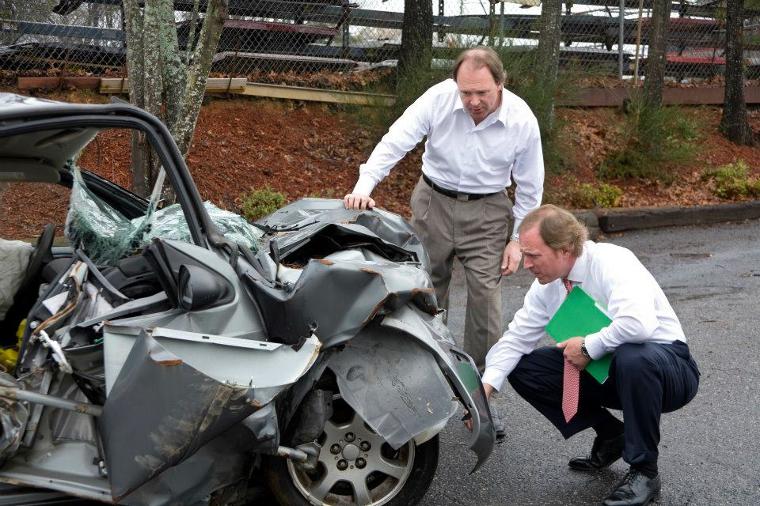
There are many elements that need to be present in order to have a viable personal injury claim. One of those elements is causation. But what is causation? Causation is simply making something happen or being the cause of an event. But in auto accident cases, the definition of causation is a little more involved.
In auto accident cases, causation is the important piece that proves that a person's negligent behavior was the cause of another person's injury. And although causation might seem so obvious that it isn't worth mentioning. Causation is not always established in auto accident cases. For example, a drunk driver was carelessly driving down the wrong side of the road. Cars were swerving trying to avoid the car. The scene was chaotic and the drunk did hit a few people before running into lamppost. A woman, a mile so or down the road, saw this got scared and panicked and ended up getting into a one-car accident involving a tree. However, although the women could see all of this up ahead, the drunk driver was nowhere near her and it was her own nerves and inability to stay leveled that cause her to lose control of her car. And when the women lined up with the rest of the people to sue the drunk driver, she lost her case because there was no causation. You can learn more at this website.
There are two types of causation in personal injury law. One is called cause in fact and the other is called proximate cause. Cause in fact is very simple. Cause in fact states that without an action from a defendant, the injury would have never occurred. The other is proximate cause. Proximate cause acknowledges that a defendant's actions may have caused an injury in a 'butterfly effect' manner but if the defendant could not foresee that what they did would cause damage they are not liable.
For example, if a driver hit a bus and fragments from the bus fly into the air and puncture a hot air balloon that is flying by and the balloon has to make an emergency landing on a high school roof and the roof caves in, the driver is not responsible for the roof because there is no reasonable expectation that they should have foreseen that they would be the result of their negligent driving. You should also visit http://uncyclopedia.wikia.com/wiki/Lawyer for more facts about accident attorneys.
Causation isn't something that can only be attributed to one person. It can be attributed to many people. If the court determines that both parties were culpable to some extent for the accident, then that would greatly affect how much the plaintiff can be awarded for damages. To get more help from an attorney from the main site, check it out!